
Single-Tenant vs Multi-Tenant Architecture: A Complete Guide with Examples

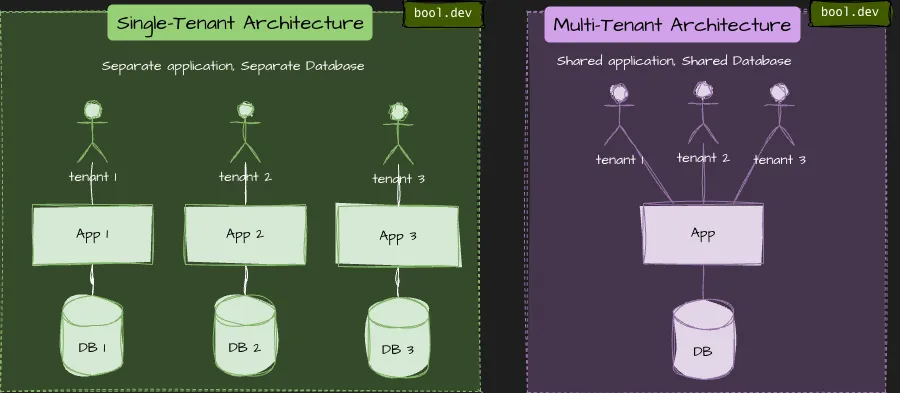
Choosing the right architectural model, single-tenant or multi-tenant, is critical when building or scaling a cloud-native application. It affects your product's cost efficiency, scalability, security, and operational complexity.
This article explores the differences, trade-offs, and use cases of each architecture. We'll also cover hybrid models, common patterns, real-world examples, and visual diagrams to make the concepts easier to understand.
What Is Tenancy in Software Architecture?
In SaaS and cloud-native applications, tenancy refers to how software instances and infrastructure are shared or not shared between customers, also known as tenants.
- A tenant can be an organization, user, or business unit that uses your service.
- Tenancy architecture defines how data, compute, and resources are isolated or shared across these tenants.
What Is Single-Tenant Architecture?
In a single-tenant setup, each tenant has a dedicated instance of the software, including compute resources, databases, and, in some cases, network infrastructure.
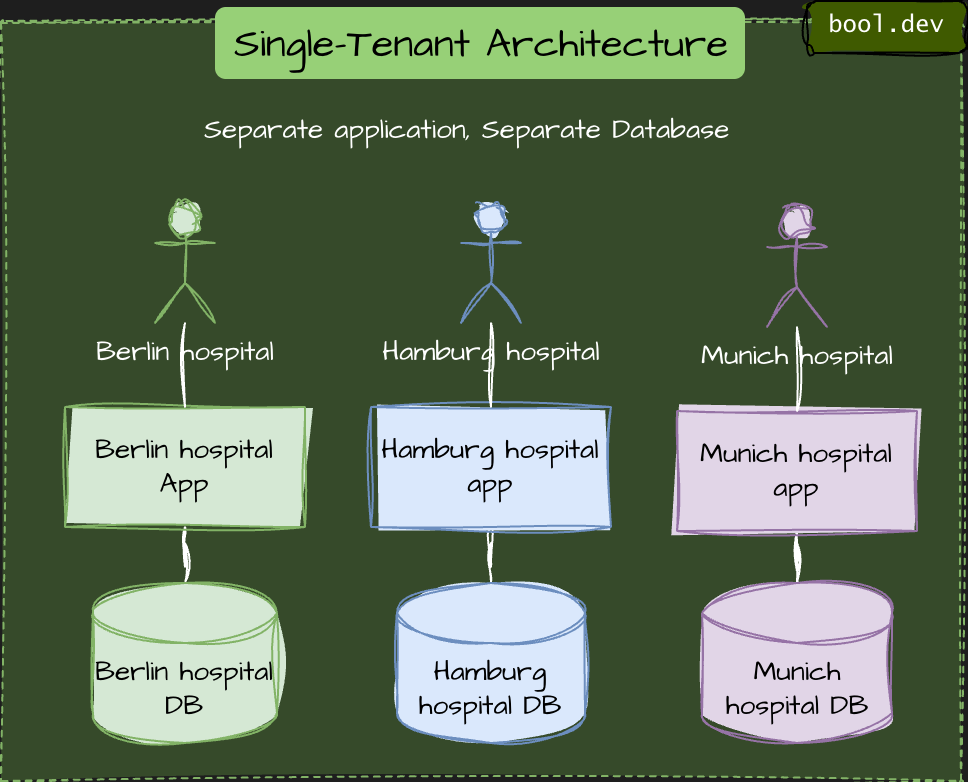
Key Features:
- Physical or virtual resource isolation
- Independent data stores per tenant
- Easier per-tenant customizations
- Simplified data residency and compliance
Example Use Case:
A healthcare SaaS provider needs to comply with HIPAA. Each hospital gets its own isolated instance running in a separate VPC with encrypted databases and dedicated storage.
✅ Pros of Single-Tenant Architecture:
- High security and data isolation
- Per-tenant customization and versioning
- Easier to support specific compliance needs
- Fault isolation – issues in one tenant don't impact others
❌ Cons of Single-Tenant Architecture:
- Higher operational cost per tenant
- Harder to scale and manage upgrades
- Infrastructure may be underutilized
Choose Single-Tenant If:
- Your customers demand high levels of isolation
- You deal with sensitive data (healthcare, finance)
- You want to offer per-tenant versioning/custom features
- You're deploying in regulated environments (GovCloud, VPC)
What Is Multi-Tenant Architecture?
In a multi-tenant system, a single application instance serves multiple tenants, with shared infrastructure and logical data separation.
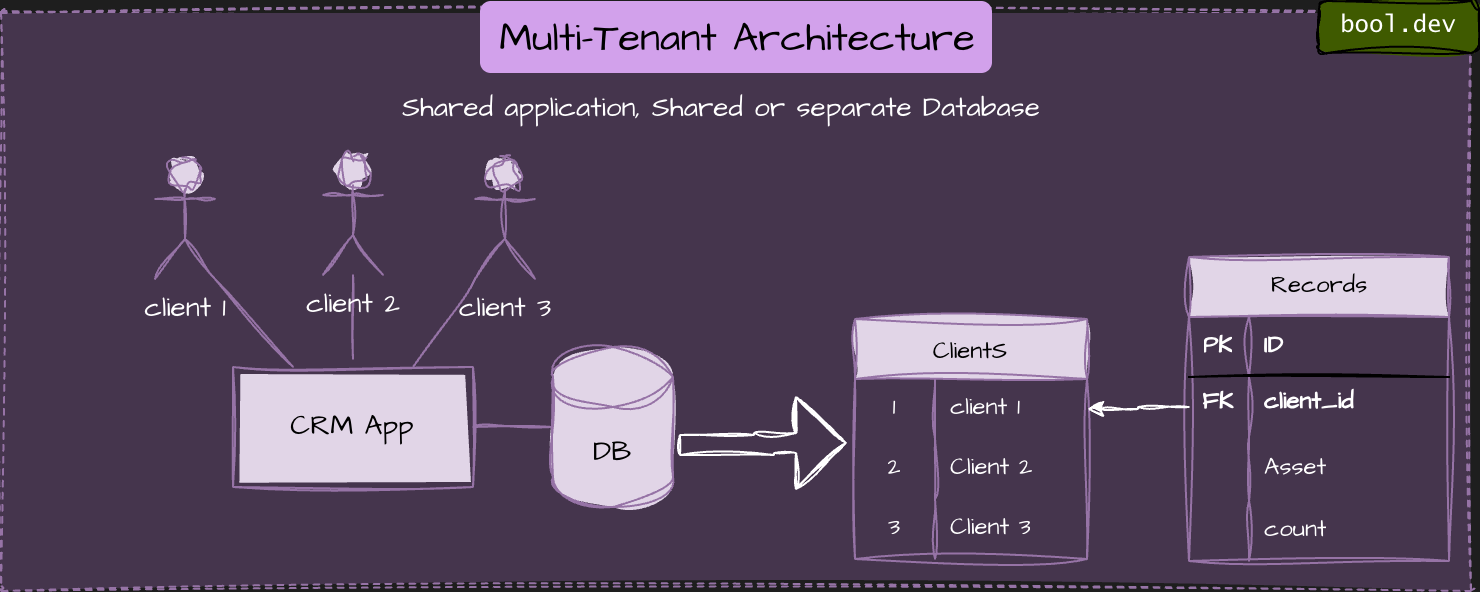
Key Features:
- One codebase, one deployment
- Tenant data is logically isolated in the app or DB layer
- Efficient resource usage and centralized DevOps
Example Use Case:
A SaaS CRM platform hosts thousands of businesses in the same cluster, separating data via customer IDs in shared databases.
✅ Pros of Multi-Tenant Architecture:
- Cost-effective – shared compute, storage, and scaling
- Easier to deploy, upgrade, and patch
- Centralized monitoring and CI/CD workflows
❌ Cons of Multi-Tenant Architecture:
- Complex data isolation and access control logic
- Noisy neighbor risk – one tenant's usage may affect others
- Limited per-tenant customization options
Choose Multi-Tenant If:
- You need to serve a large number of tenants efficiently
- Your product needs frequent updates across all users
- You're optimizing for cost and horizontal scalability
- You're an early-stage startup and want to iterate quickly
The Hybrid (Mixed-Tenancy) Model
Many modern SaaS companies adopt a hybrid approach to balance cost and security. In this model, the application tier is shared (multi-tenant), but the database tier is isolated (single-tenant).
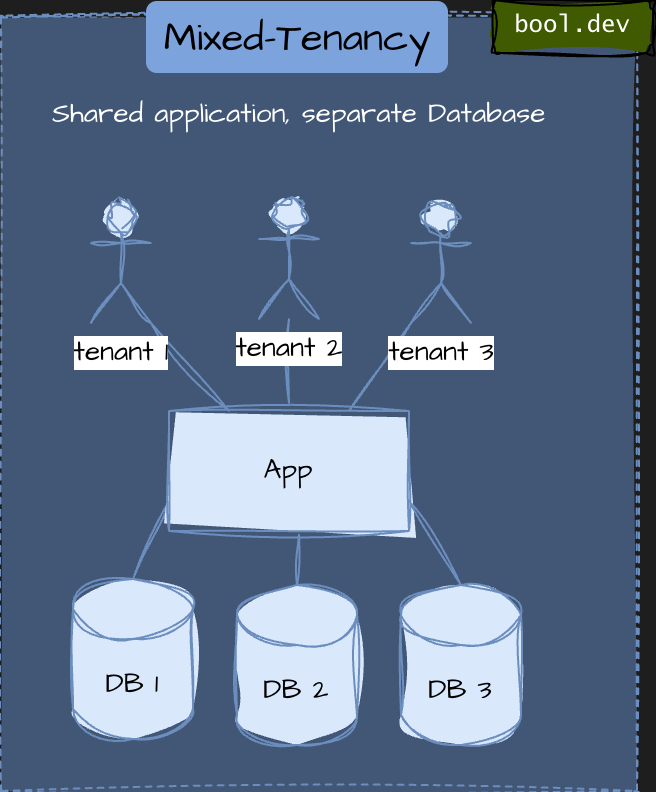
Best for: Companies that need the cost-benefit of shared compute but have clients with strict data residency or "encryption-at-rest" requirements.
Tenancy Comparison Table
| Feature | Single-Tenant | Multi-Tenant | Mixed Model |
|---|---|---|---|
| Cost | High (Dedicated) | Low (Shared) | Moderate |
| Scalability | Manual / Difficult but more flexible | Automated / Easy but less flexible | Balanced |
| Security | Physical Isolation | Logical Isolation | High (Data Isolation) |
| Maintenance | Complex (Per Instance) | Simple (Centralized) | Moderate |
| Customization | High | Low | Moderate |
Frequently Asked Questions
1. Which architecture is better for security?
Single-tenant architecture is generally considered more secure due to physical isolation, making it the standard for highly regulated industries such as finance and healthcare.
2. Can I move from Single-Tenant to Multi-Tenant later?
Yes, but it is a complex engineering task. It often requires rewriting the data access layer to include tenant IDs and implementing robust resource-sharing logic.
3. What is the "Noisy Neighbor" effect?
This occurs in multi-tenant environments when a single customer consumes a disproportionate share of shared resources (CPU, RAM, or I/O), thereby degrading other customers' performance.
Final Thoughts
The choice between single-tenant and multi-tenant architectures isn’t binary. Your choice should align with your product lifecycle stage, customer compliance requirements, and engineering capabilities. While startups often begin with multi-tenancy for speed and cost, enterprise-grade products often offer "Private Cloud" (single-tenant) options for their highest-paying clients.