


Weekend Reading: A weekly roundup of interesting Software ArchitWeekend Reading: A weekly roundup of interesting Software Architecture and Programming articles from tech companies. Find fresh ideas and insights every weekend.
Distributed Systems Patterns Cheat Sheet
👉 For backend engineers and software architects reviewing reliability and consistency decisions
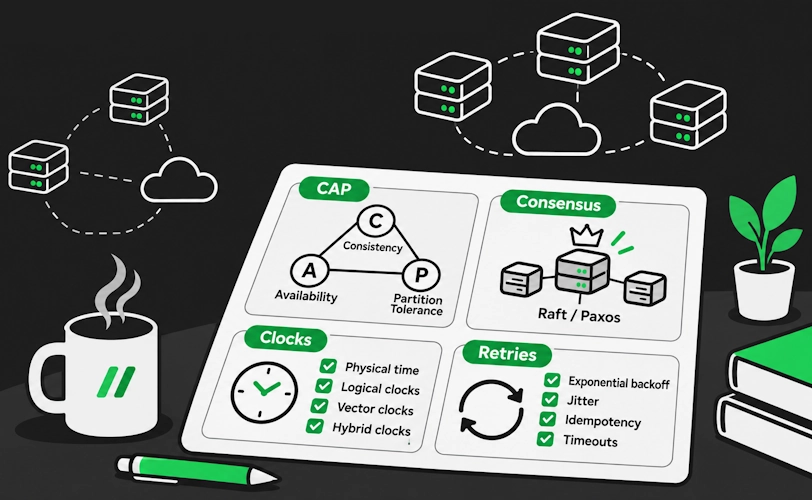
A timeout leaves a caller with an uncomfortable ambiguity: the request may have disappeared, the server may still be working, or the operation may have completed without its response arriving. This guide organizes distributed systems concepts around those failures, covering replication, consensus, ordering, partitioning, retries, and distributed transactions.
Its most useful connections are between mechanisms that must work together. Retrying writes requires idempotency. An outbox makes a database change and its event durable together, but consumers still need to handle duplicate delivery. A saga introduces compensation while exposing intermediate business states.
Use the guide as a design-review checklist. Choose one important operation and trace what happens when an acknowledgment disappears, a process restarts, or a message arrives twice. That exercise exposes missing guarantees more effectively than selecting patterns by name.
The Database Pin: Zero-Downtime Database Migrations with Strong Read-After-Write Consistency
👉 For backend engineers and database teams planning live migrations
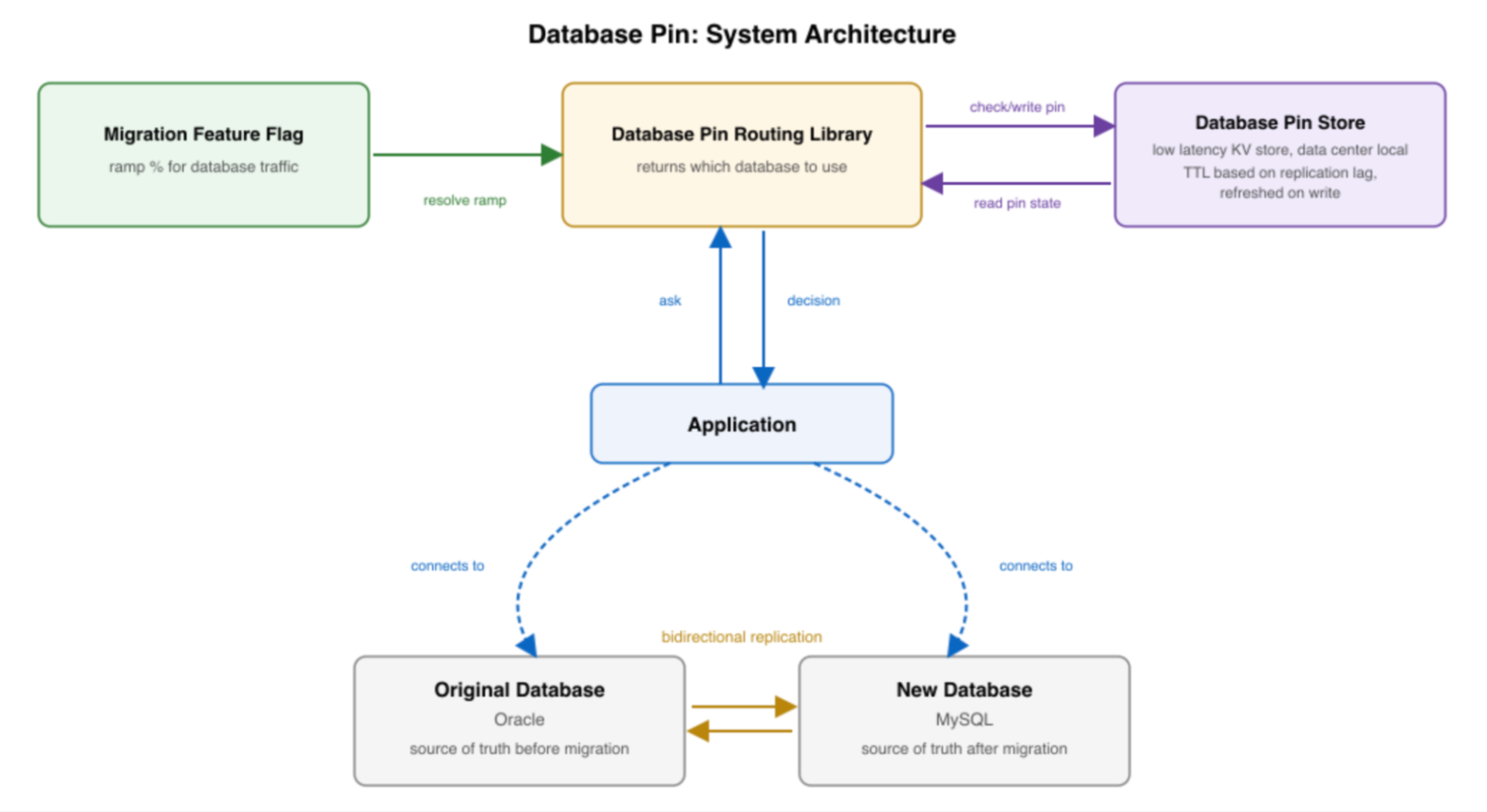
LinkedIn’s Oracle-to-MySQL migration uses short-lived routing records to keep recently written entities on their current database. A live pin overrides the migration feature flag and refreshes on writes. Once it expires, routing follows the rollout setting. Bidirectional replication keeps the databases synchronized.
The important conditions sit beneath the headline: entity routing must remain consistent, and pin lifetime must cover replication lag. Strict write enforcement persists the pin before accepting the database write. Separately, the described fail-open lookup policy can permit stale reads when the pin store is unavailable.
Treat this as a conditional migration pattern. Before adopting it, define what happens when lag exceeds the expected bound or routing state cannot be read. Those failure decisions determine the actual consistency guarantee, including during rollback.
How Uber Evals 1 Million Agent Skill Invocations a Month
👉 For developer productivity teams building and maintaining agent workflows
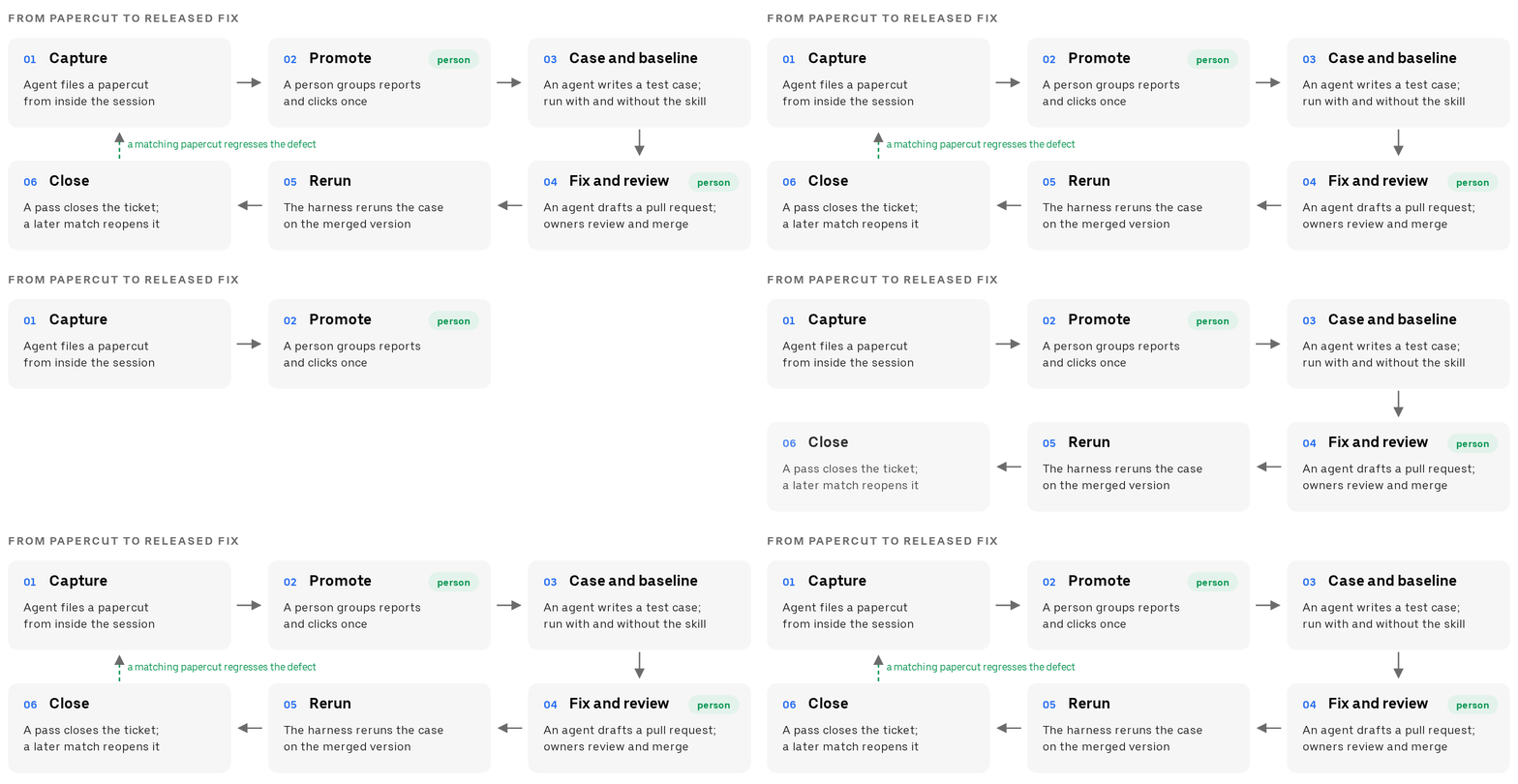
Uber’s skills marketplace grew beyond 5,000 skills, with more than a million invocations in one month. Its evaluation approach combines fixed cases, real prompts, human judgment, and checks of the tools and steps an agent actually used. Isolated environments expose dependencies on an author’s laptop.
The particularly useful practice is ablation: replaying prompts with and without a skill, or with parts removed. This tests whether instructions still contribute as models improve. Real failures also become regression cases, including incorrect units, misleading tool responses, and workflows waiting for nonexistent CI checks.
A practical starting point is to evaluate one frequently used workflow against its unspecialized baseline. Measure outcome quality, tool errors, latency, and cost together. Following every prescribed step is insufficient if the result is wrong; additional instructions also need to justify the context they consume.
Design Once, Deploy at Scale: Building a Template-Driven ML Ecosystem
👉 For ML platform engineers managing families of production models
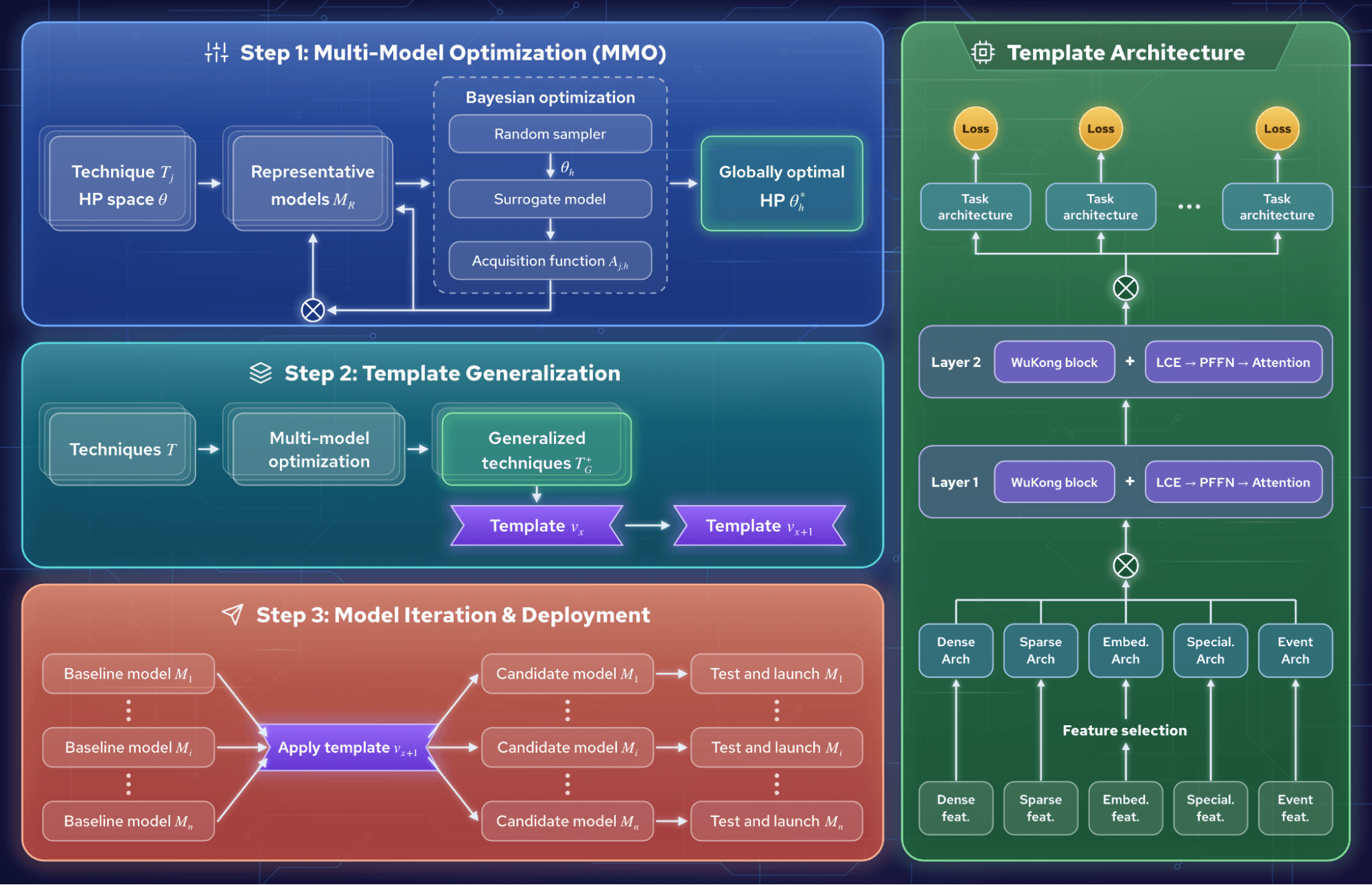
Meta describes Standard Model Templates: shared combinations of model architecture, feature logic, training settings, and serving configuration. Improvements are evaluated across representative models, checked on held-out models, and incorporated into template versions for broader adoption.
Meta reports a 92% reduction in per-model engineering time over two years. The evaluation considers regression frequency alongside aggregate gains, recognizing that an improvement with an attractive average can still be difficult to deploy broadly.
The architectural lesson extends beyond ML: shared implementations make improvements transferable, provided their boundaries reflect real similarities. Start with a coherent family of workloads and explicit exceptions. If every historical variation becomes a template option, the configuration space grows back into the fragmentation the platform was intended to reduce. Validate transfer before treating a successful representative case as evidence for the entire fleet.
Comments (0)